
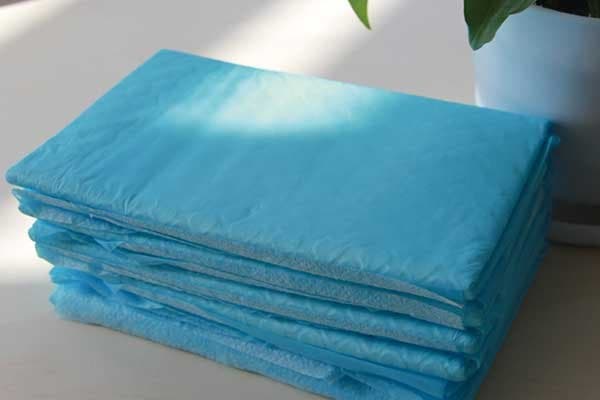
Begin with an everyday setting
Picture a customer comparing products in a pet shop or opening a product page on a phone. A photo of a folded blue pad identifies the category, but leaves practical questions unanswered. How large is it when unfolded? Which side is the surface? How many pieces are inside? A useful presentation answers these questions before making broad promises.
For a retailer, the starting point is the intended care setting and the space available for the pad. Present it as a training-pad product with clear instructions for the confirmed configuration. Buying a pad alone does not guarantee a training outcome, and a general care product should not be presented as having a medical purpose.
Look beneath the surface
| Product element | Published detail | Why it belongs in the product brief |
|---|---|---|
| Surface | Non-woven fabric | Identifies the upper material customers see and handle |
| Absorbent core | Super absorbent polymer (SAP) | Identifies the absorbent component for sample evaluation |
| Backing | PE base film | Identifies the base material to inspect alongside the edges |
| Listed dimensions | 600 × 600 mm | Provides a measurement to confirm for the chosen SKU |
| Pack descriptions | L: 40 pieces; XL: 20 pieces | Separates piece count from the pad-size decision |
These materials describe the construction, not a measured absorption capacity, uptake speed or leakage result. Tie performance claims to the agreed sample and test method.
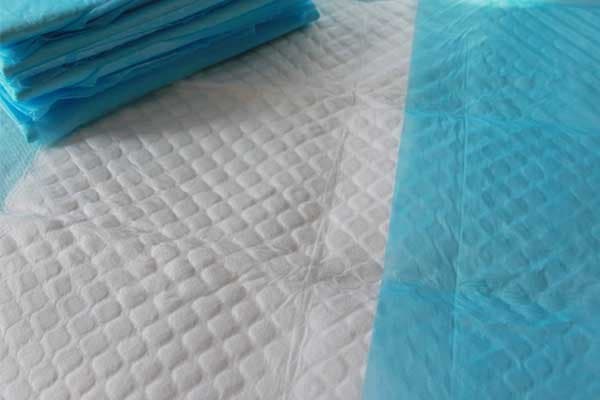
Choose dimensions before the size label
A size label is convenient for a shelf, but measurements make the buying decision concrete. Love Sand lists 600 × 600 mm in its current product details, alongside L packs of 40 pieces and XL packs of 20 pieces. The information does not map a separate dimension to each named variant. Agree on dimensions and count together for every SKU, then open a sample and review it as a customer would.
- Unfold it fully: measure the outside dimensions and, where relevant, the absorbent area inside the edges.
- Handle the surface and backing: inspect the finish and edges instead of judging the product by thickness alone.
- Evaluate liquid handling with a recorded method: agree on liquid quantity, application and waiting time before comparing samples.
- Review the whole retail configuration: confirm that dimensions, piece count and sample reference match the quotation.
This small review connects the specification sheet with the physical product. Keep a dated sample reference and agree on measurable acceptance points before production, so later discussions refer to the same configuration.
Make the product clear on the shelf
Bring the product name, confirmed dimensions and piece count together on the retail pack or online listing. Pair a full-pad photograph with a close view of the surface so customers can connect the description with the item. If a photograph shows an example configuration, say so instead of leaving the size to inference.
For an Arabic or bilingual presentation, keep numbers, dimensions and size names consistent across the front, back and product page. Prepare care and disposal wording for review by the destination importer. Add only supported claims: layered construction alone does not establish antibacterial, medical or environmental benefits.
For a private-label project, share your approved logo, intended sales channel and packaging brief. Confirm available options, piece count, outer-carton arrangement and production timing with the export team. A clear presentation should describe the product that will actually be supplied.
Discuss an OEM / ODM projectCompare your shortlist
Build a training-pad range with Love Sand
Start with one clearly defined training-pad SKU for your destination market. Tell Love Sand the country and port or city, sales channel, requested dimensions, pieces per pack, expected quantity and branding direction. The team can then confirm the available configuration and sample arrangements, helping you move from a product idea to a coordinated retail and shipping brief.
Discuss products and samples